Skip to content
Strategy-led websites, social media and SEO for small businesses
London Axion

Concept Project

Neighbourhood Cafe Launch System

A mobile-first website and local search foundation designed to help a neighbourhood cafe build credibility, communicate its offer and attract nearby customers before opening.

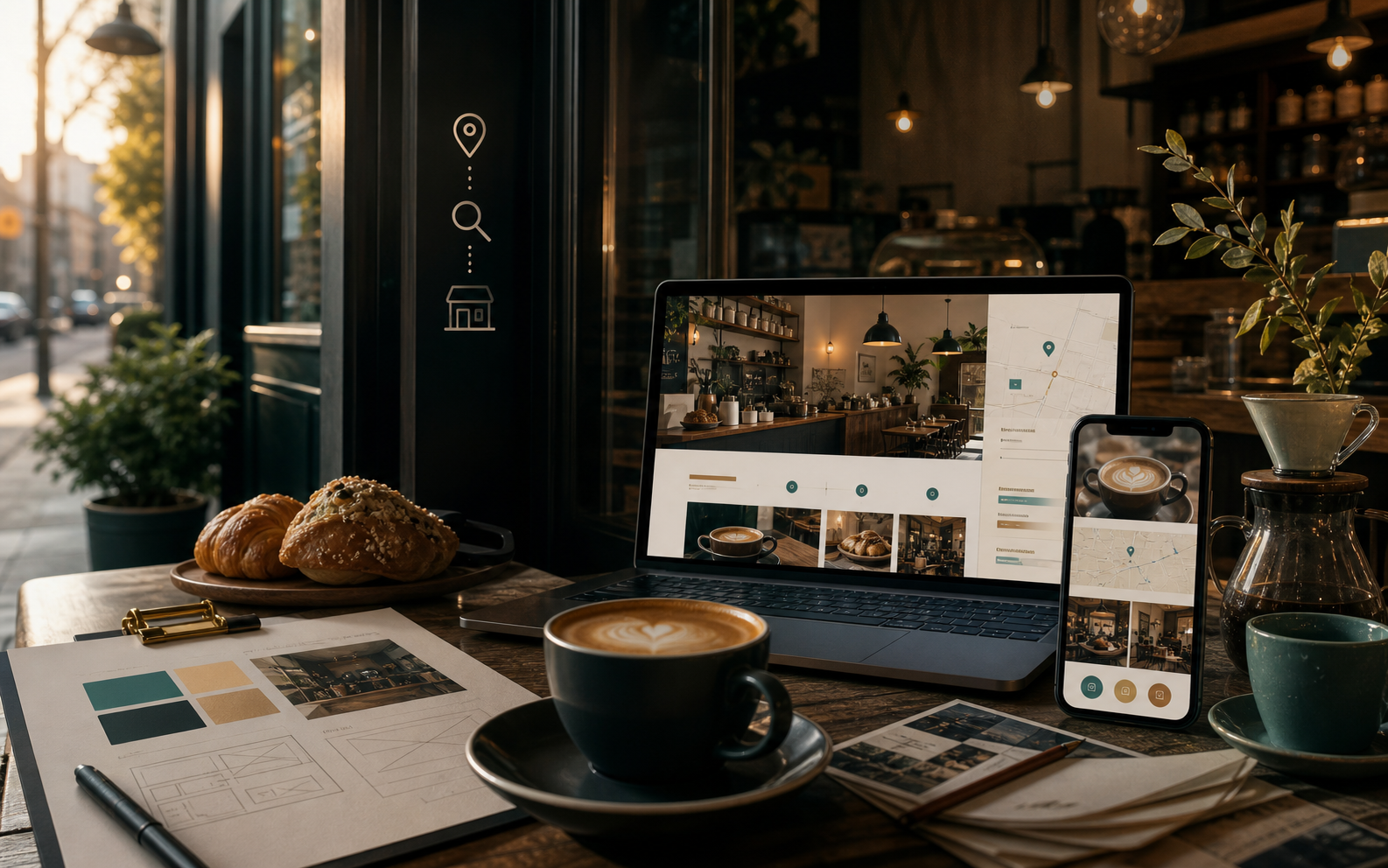
Neighbourhood Cafe Launch System concept visual
Industry
Hospitality
Services
3
Format
Concept Project
Website DevelopmentLocal SEOIntegrated Campaign Planning

Client Overview

The Neighbourhood Cafe Launch System is a concept project developed for an independent hospitality business preparing to open in a competitive local market.

As a new cafe without an established customer base or trading history, the business needed a practical digital presence that could support the period before launch and continue to provide value once the doors opened. The website needed to introduce the concept, communicate the style of food and drink available, provide accurate location and opening information, and give prospective customers an easy way to ask questions or register their interest.

The project also needed to reflect the realities of operating a small hospitality business. The solution could not depend on complex functionality, frequent technical support or an administrative process that would become difficult to maintain during a busy launch period.

London Axion therefore developed a focused launch system combining website development, local SEO foundations, reusable campaign content and straightforward enquiry tracking.

The Challenge

A new neighbourhood cafe needs to establish trust before customers have visited the premises, experienced the service or seen independent reviews.

Potential customers may first encounter the business through a local search, a social media post, a recommendation or a map listing. At that stage, they usually need quick answers to practical questions:

Where is the cafe? When will it open? What type of food and drink will it serve? Does the atmosphere suit the occasion? Are bookings required? How can the business be contacted?

The cafe therefore required a website capable of answering these questions quickly, particularly for mobile visitors who might be searching while already in the area.

The principal objectives were to:

The project also had to remain flexible. Opening dates, menu items, operating hours and booking arrangements can change during a hospitality launch, so important information needed to be easy to update without affecting the wider website.

01

Create a concise, credible and mobile-first launch website.

02

Explain the cafe’s offer without requiring a complete menu before every product and price had been finalised.

03

Structure location and service-area content around relevant local searches.

04

Provide space for opening announcements, menu highlights and launch updates.

05

Create clear enquiry and future booking routes without introducing unnecessary operational complexity.

06

Prepare the website for campaign traffic from social media and other launch activity.

07

Establish an analytics framework that could distinguish general interest from commercially useful actions.

Our Approach

London Axion planned the project around a simple customer journey: discover the cafe, understand the offer, plan a visit and take the next step.

Instead of proposing a large website with numerous underdeveloped pages, we designed a compact structure in which each section had a clear purpose.

The homepage would establish the cafe’s proposition, visual character and location immediately. Menu-preview sections would introduce the type of food and drink available without relying on a downloadable PDF or forcing the business to publish details before they were confirmed. Location content would provide practical context about the neighbourhood, transport links and nearby areas served.

The website structure was then aligned with local SEO requirements. Relevant location phrases were mapped to natural page headings, titles and descriptions, while the content was written to remain useful to customers rather than repeating geographic keywords mechanically.

The proposed website also included reusable visual and content modules. These would allow the cafe to turn menu highlights, opening announcements, supplier stories and behind-the-scenes material into coordinated website and social media content.

The approach was intentionally proportionate. Rather than adding a complex reservation platform before the business understood its operational requirements, the initial conversion routes focused on enquiries, opening updates and expressions of interest. More advanced booking functionality could be introduced later if customer behaviour and internal processes justified it.

Implementation

The concept was developed through several connected stages.

01Discovery and launch planning

The first stage defined the intended customer base, location, offer, opening timetable and operational limitations. This established which information could be published immediately and which areas needed flexible placeholders until final details were approved.

The main conversion actions were also identified. These included requesting opening information, making a general enquiry, following the cafe’s social channels and, where appropriate, joining a launch mailing list.

02Website structure and content hierarchy

A compact page structure was created around the information most useful to prospective customers.

The homepage included:

  • A clear introductory proposition.
  • Selected menu and product highlights.
  • Location and neighbourhood context.
  • Proposed opening information.
  • Brand and atmosphere content.
  • Contact and enquiry routes.
  • Space for announcements and social content.
  • Frequently asked questions covering common pre-opening enquiries.

Content was arranged so that practical information remained easy to find without weakening the visual storytelling expected from a hospitality brand.

03Mobile-first interface planning

Because a significant proportion of local hospitality searches take place on mobile devices, the concept prioritised small-screen usability from the beginning.

Opening information, directions, contact details and calls to action were positioned for quick access. Navigation was kept simple, text sections were designed for scanning, and menu previews were planned as responsive website content rather than image-heavy documents that could be difficult to read on a phone.

04Local SEO foundations

Local search themes were mapped to the homepage, location content, metadata and headings.

The SEO plan considered searches combining the cafe category with its neighbourhood, nearby landmarks and customer needs. It also included preparation for consistent business information across the website and relevant local listings.

A Google Business Profile setup and verification plan would form part of a real launch engagement once the location, opening date and trading information had been confirmed.

Technical foundations included crawlable navigation, descriptive page titles, editable metadata, structured headings, image alternative text, an XML sitemap and appropriate local business structured data where eligible.

05Campaign-ready content modules

Reusable blocks were developed for launch announcements, menu previews, supplier introductions, seasonal products and community updates.

These blocks were designed so that one core idea could be adapted for the website, Instagram, Facebook and other suitable channels without reproducing exactly the same content in every location.

06Tracking and quality assurance

The measurement plan covered meaningful actions such as contact-form submissions, telephone-link clicks, direction requests, menu engagement and launch-list registrations.

Before publication, a live implementation would also require responsive testing, form testing, metadata checks, analytics verification, content approval and confirmation that all opening information was accurate.

Concept touchpoints

Visual moments that show how the system could translate into a website, campaign or search experience.

Neighbourhood Cafe Launch System gallery visual 1
Neighbourhood Cafe Launch System gallery visual 2

The Results

As a concept project, the Neighbourhood Cafe Launch System does not have live traffic, ranking or enquiry data.

The completed concept nevertheless demonstrates how a small hospitality business can create a credible and useful digital foundation without overbuilding its first website.

The proposed system would provide:

If implemented, performance should be reviewed through local search impressions, direction requests, website engagement, telephone clicks, enquiries and other confirmed conversion actions.

01

A clear and professional online presence before opening.

02

A faster route to important information for mobile visitors.

03

A flexible way to update opening hours, menus and announcements.

04

Stronger alignment between the website, local search and launch campaigns.

05

A search-friendly content structure capable of supporting future local SEO.

06

Straightforward enquiry paths that do not create unnecessary administrative pressure.

07

A measurement framework for understanding how customers discover and engage with the cafe.

Conclusion

The Neighbourhood Cafe Launch System shows how website development, local SEO and campaign planning can work together from the earliest stage of a business launch.

By concentrating on the questions local customers are most likely to ask, the concept avoids unnecessary functionality while still providing a scalable foundation for future menus, bookings, events and marketing campaigns.

The project reflects London Axion’s approach to small-business digital development: begin with the customer journey, prioritise the information that influences action and create a platform the organisation can realistically maintain.

---

Have a project that needs this level of structure?

Send the brief and London Axion will help shape the next practical step.

Start a project

Related service paths

Explore the London Axion services connected to this project type.